The Unmonitored

A flash fiction story by Bonnie Gerstenlauer
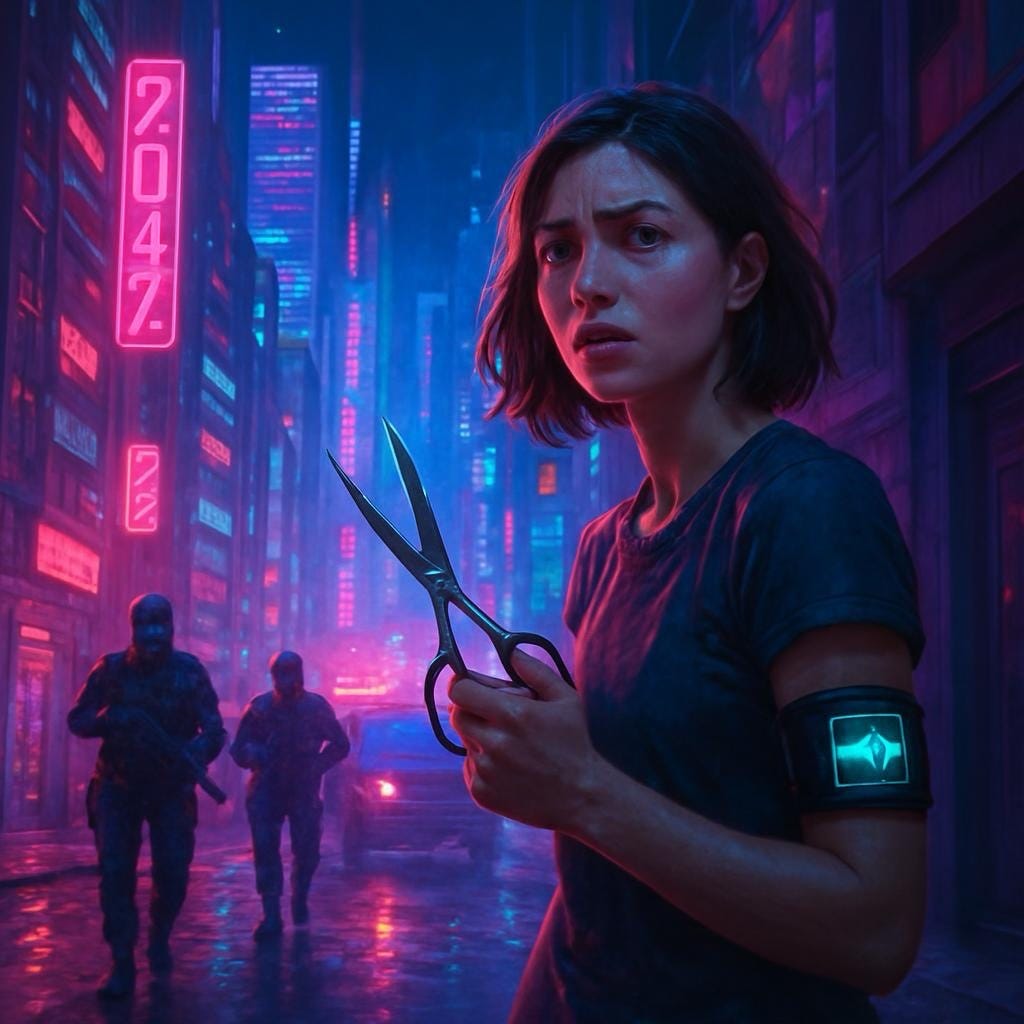
In the year 2047, the world had been transformed into a dazzling mosaic of glittering skyscrapers and vibrant neon lights, where technology had intertwined with every thread of our existence. Among the countless innovations, one shone brightest: the Health Monitoring Device. This small, sleek armband was more than mere machinery; it was a lifeline, a guardian angel watching tirelessly over us, promising to keep us in perfect health. Or so we desperately wanted to believe.
The device vigilantly monitored every heartbeat and breath, streaming real-time data back to the government’s central hub. Blood sugar levels, vital signs, even emotional states—everything was recorded without pause. If anyone faltered, the device would instinctively dispense the precise medication needed, quickly absorbed through the skin. Diabetics received insulin at the first sign of trouble, while those with heart conditions found their blood pressure managed seamlessly. It was a vision of utopia—or perhaps a nightmare of oppression, depending on who you asked.
Emma, a young woman in her twenties, often felt torn between gratitude and suffocation. On one hand, the monitor had saved her life countless times. A childhood illness had left her with a fragile heart, and thanks to the device, she was free to pursue her passions. But on the other, it felt like an invisible chain, stripping away her autonomy and reducing her existence to mere data points.
One evening, as the city thrummed with life, Emma’s chest tightened with familiar anxiety. The armband buzzed softly against her skin, sensors picking up her rising emotional distress. She took a deep breath, knowing the device was poised to deliver the psychotropic medication she once resisted. The thought of losing control haunted her; she had watched friends fade away after standing up against authority.
But tonight, something shifted within her. As her anxiety threatened to overwhelm her, Emma made a choice. She would no longer let those behind the monitors dictate her life. Heart pounding, she seized a pair of scissors from the kitchen drawer. The device had been her protector—a symbol of safety—but also a constant reminder of her fears. She was done being a prisoner within her own body.
With a decisive act, she cut through the smooth band of the device, triggering a piercing alarm. Her heart sank as she realized the signal had reached the authorities, and she knew the consequences would be severe.
As the lights outside her apartment flickered erratically, a rush of both liberation and dread washed over her. She had taken back her autonomy, but at what price? Sirens wailed in the distance, growing louder with each second. Emma’s mind raced—should she run? But where could she go? The city’s gaze was everywhere, watching and waiting.
Just as the sirens reached a deafening crescendo, her phone vibrated with a message from her neighbor Gina, urging her to escape. She hesitated, caught between the instinct to flee and the terrifying uncertainty of what lay ahead. Suddenly, the door burst open, and two dark-clad officers stormed in, their faces cold beneath their visors.
“Emma Carter, you are in violation of the Health Compliance Act,” one declared, stepping forward with a weapon at the ready. “Come with us immediately.”
In that moment, Emma saw a harsh truth: this world was never truly about health or safety. It was about control. As they reached for her, a flicker of fierce defiance ignited in her soul. She was not just a data point—she was a person, with a voice and a choice. She would not disappear quietly.
In a heartbeat, she lunged toward her balcony’s sliding glass doors. The leap into the unknown felt like a burst of pure freedom. The city’s glowing lights beckoned like a siren’s call, pulling her into possibility—a life unmonitored, even if fraught with peril. This was her chance to break free from the shadows of oversight and to reclaim her own destiny.