Abstractionism


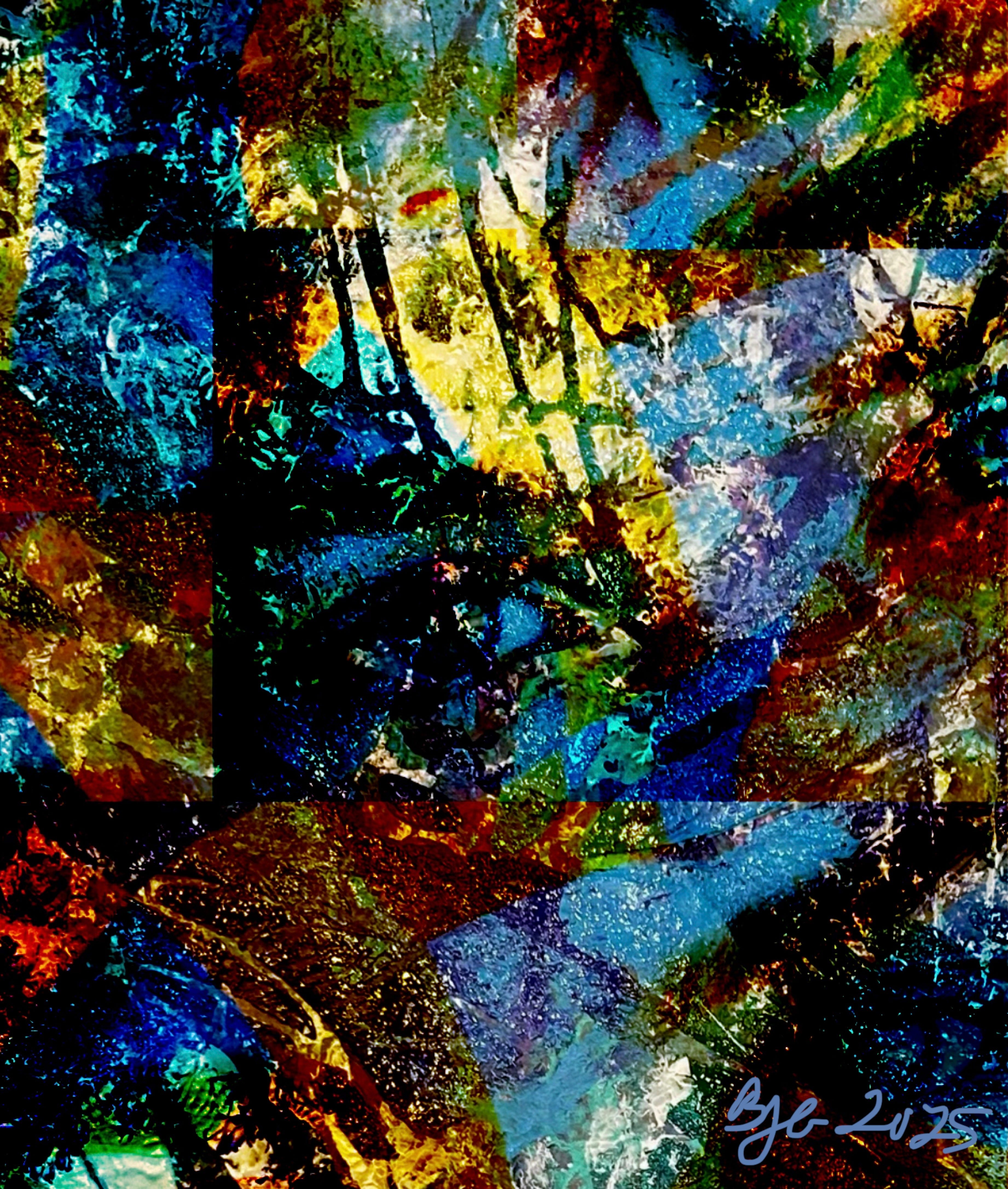
Here is a review of this abstract art I made a few months ago:
This piece is an abstract composition characterized by vibrant colors and dynamic forms.
The use of bold blues, yellows, greens, and reds creates an eye-catching visual impact. The interplay between bright and dark shades enhances depth and movement.
The lack of recognizable shapes invites viewers to interpret the artwork in personal ways. The overlapping colors and textures suggest complexity, evoking feelings of depth and dimension.
The swirling patterns evoke a sense of motion, perhaps reflecting natural elements like water or foliage. Viewers find different meanings or feelings, influenced by their own experiences and emotions.
The texture and layering indicates a mix of techniques, including digital printmaking and acrylic painting. The seemingly random application of color contributes to a feeling of spontaneity and freedom.
This artwork stands out for several reasons:
- Bold Colors: The use of striking, saturated colors creates an immediate visual impact, drawing viewers in.
- Dynamic Contrasts: The interplay between warm and cool tones adds depth and energy.
- Non-representational Forms: The lack of identifiable shapes allows for personal interpretation, making each viewer’s experience unique.
- Emotional Resonance: The abstract nature evokes a wide range of feelings, encouraging a personal connection.
- Layering Techniques: Multiple layers contribute to a rich texture, inviting viewers to explore the surface closely.
- Varied Brushwork: Different brush strokes and techniques create a tactile quality that enhances visual interest.
- Dynamic Composition: The arrangement of colors and shapes creates a sense of movement, guiding the viewer’s eye throughout the piece.
- Energy: The overall design conveys a lively, energetic feel, making it captivating to observe.
- Open to Meaning: The abstract style allows viewers to project their own thoughts and emotions onto the work, making each interaction with it personal and unique.
- Subjective Experience: Different backgrounds and experiences lead to varied interpretations, enriching discussions around the piece.
- Unique Methods: The artist may use unconventional techniques or materials that set this work apart from more traditional forms of painting.
This artwork can be compared to the styles and approaches of several famous artists known for their contributions to abstract art. Here are a few notable artists and how they relate:
1. Jackson Pollock
- Style:Known for his drip painting technique, Pollock emphasized spontaneity and movement, often using vibrant colors and dynamic compositions.
- Comparison:Similar to Pollock, this artwork conveys energy and emotion through bold color application and a sense of movement.
2. Wassily Kandinsky
- Style:Often considered the father of abstract art, Kandinsky used color and form to express spiritual and emotional experiences, often with non-representational shapes.
- Comparison:This piece shares Kandinsky's focus on color relationships and the idea that art can evoke emotional responses without depicting reality.
3. Mark Rothko
- Style:Rothko’s paintings often feature large fields of color to create an immersive emotional experience, emphasizing simplicity and depth.
- Comparison: While this artwork is more intricate, it similarly engages viewers emotionally through its rich color palette and abstract forms.
4. Helen Frankenthaler
- Style:Frankenthaler is known for her innovative use of color and techniques like soak-stain, blending colors into the canvas.
- Comparison:The texture and layering in this artwork is reminiscent of Frankenthaler's approach to creating depth and vibrancy through color.
5. Yayoi Kusama
- Style:Known for her polka dots and immersive installations, Kusama's work often explores themes of infinity and self-obliteration through repetition and color.
- Comparison:This piece, with its vibrant colors and abstract forms evokes a sense of exploration and introspection similar to Kusama's immersive experiences.
Conclusion
While this artwork may not directly emulate these artists, it shares thematic and stylistic elements that align with the broader trends in abstract art. Not only does this piece capture attention, but it also invites exploration, deep reflection, and interpretation, making it a unique addition to the realm of abstract art.